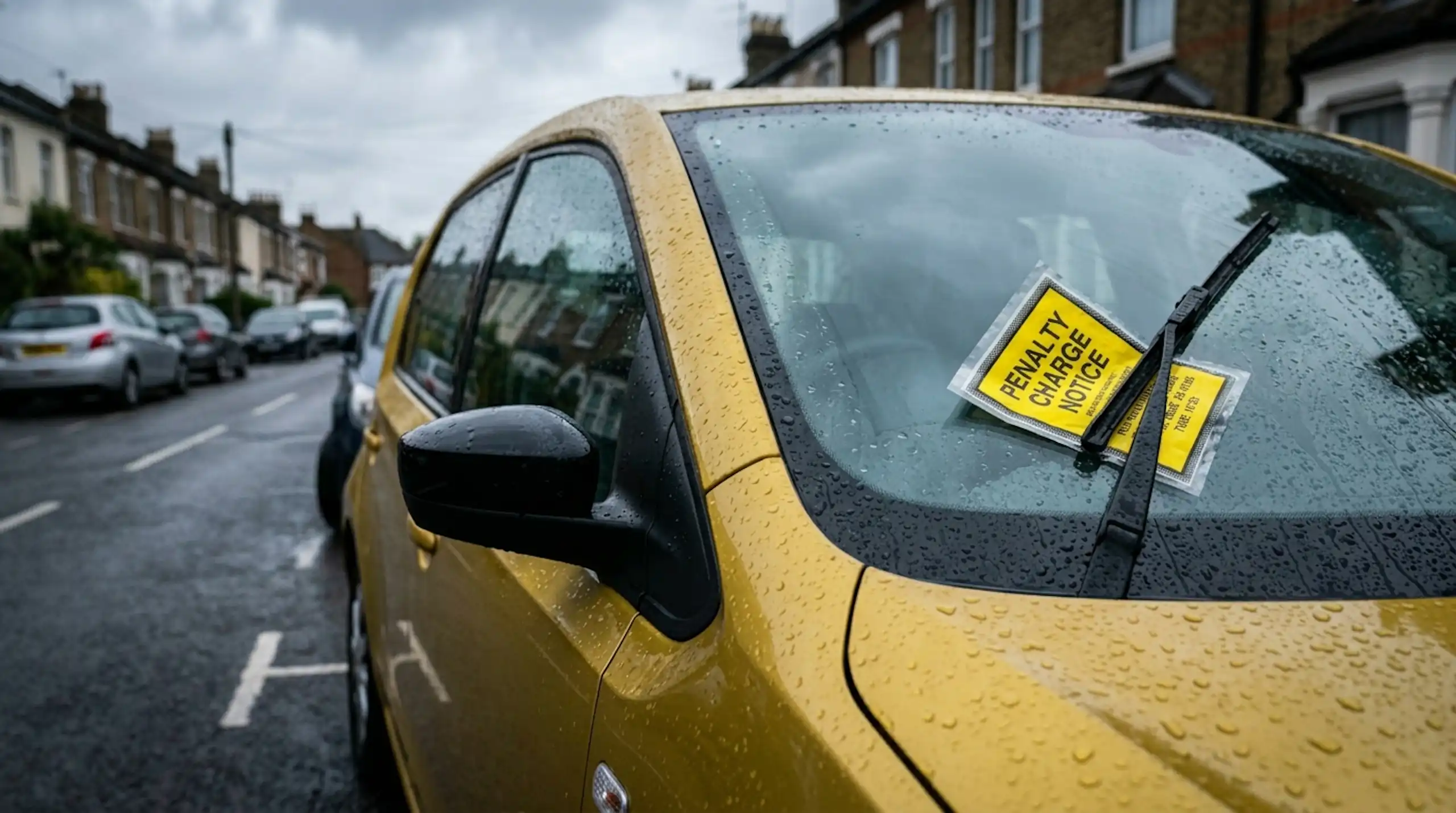
If a notice has landed on your windscreen or arrived in the post with the letters "PCN" on it, here is the short answer: a PCN is a Penalty Charge Notice, a civil penalty issued by a council or by Transport for London for breaking a parking, bus lane or traffic rule. It is not a criminal fine, it will not put points on your licence, and you usually have options.
Take a breath before you do anything. The most useful first step is not to pay; it is to understand what the notice actually is, because the same three letters are used for two very different things. This guide explains what a PCN means, who issues them and why, how much they cost, the deadlines that matter, and how to challenge one if you think it is wrong.
What a PCN is, in brief
- PCN stands for Penalty Charge Notice - a civil penalty from a council or TfL for a parking, bus lane, moving traffic or congestion contravention.
- It is not criminal - no criminal record and no licence points (those come from a separate Fixed Penalty Notice).
- Watch the name - a private "Parking Charge Notice" shares the initials but is an invoice from a private company, not a council fine.
- Cost - £50 to £70 outside London, £90 to £160 in London, and £160 for a TfL PCN; private tickets are capped at £100.
- Deadlines - you normally have 28 days to pay or challenge, with a 50% discount in the first 14 days.
- You can appeal - for free, through the council and then an independent tribunal.
What does PCN stand for?
PCN stands for Penalty Charge Notice. It is issued by a local authority or by TfL under the Traffic Management Act 2004 (and, for some older parking rules, the Road Traffic Act 1991). A Civil Enforcement Officer, or increasingly a camera, records the contravention, and the notice is fixed to your vehicle, handed to you, or sent by post.
Here is the part that trips people up: the initials "PCN" are also widely used for a Parking Charge Notice, which is a completely different document issued by a private parking company. So the same three letters can mean a statutory council penalty or a private invoice. Knowing which one you are holding decides everything that follows, so it is always the first thing to check. There is a fuller walkthrough on the parking ticket help hub.
Is a PCN a fine, and will it affect my licence or credit?
A council PCN is a civil penalty, not a criminal fine. That means:
- No penalty points and no criminal record. Points only come from a Fixed Penalty Notice (FPN), which is a separate, criminal matter issued by the police, a council or the DVSA, usually for things like dangerous parking.
- No automatic effect on your credit file. A PCN only reaches your credit record in the rare event that it escalates all the way to a county court judgment for non-payment.
- It is enforceable, though. If you ignore it, a council can register the debt at court and instruct enforcement agents, so a PCN should never simply be left.
In short, a PCN is more serious than a private invoice but far less serious than a criminal conviction; it sits in the civil middle ground.
Who issues PCNs, and what for?
Two main bodies issue genuine PCNs:
- Local councils, for parking and waiting contraventions such as parking on double yellow lines, overstaying in a pay and display bay, parking without a valid permit, or stopping on zig-zag lines. In many areas councils also enforce moving traffic rules, such as banned turns, box junctions and bus lanes.
- Transport for London (TfL), for its own schemes: the congestion charge, the Ultra Low Emission Zone (ULEZ), red routes, and TfL bus lanes and moving traffic rules.
Some more serious parking situations, such as leaving a vehicle in a dangerous position, are dealt with by the police as a Fixed Penalty Notice instead, which is why a small number of tickets can carry points. You may also occasionally see an Excess Charge Notice (ECN), an older type of council parking notice used in some car parks.
Snapmyfine states that more than 20,000 PCNs are issued across London every day, so if one of these notices has your registration on it, you are in very common company.
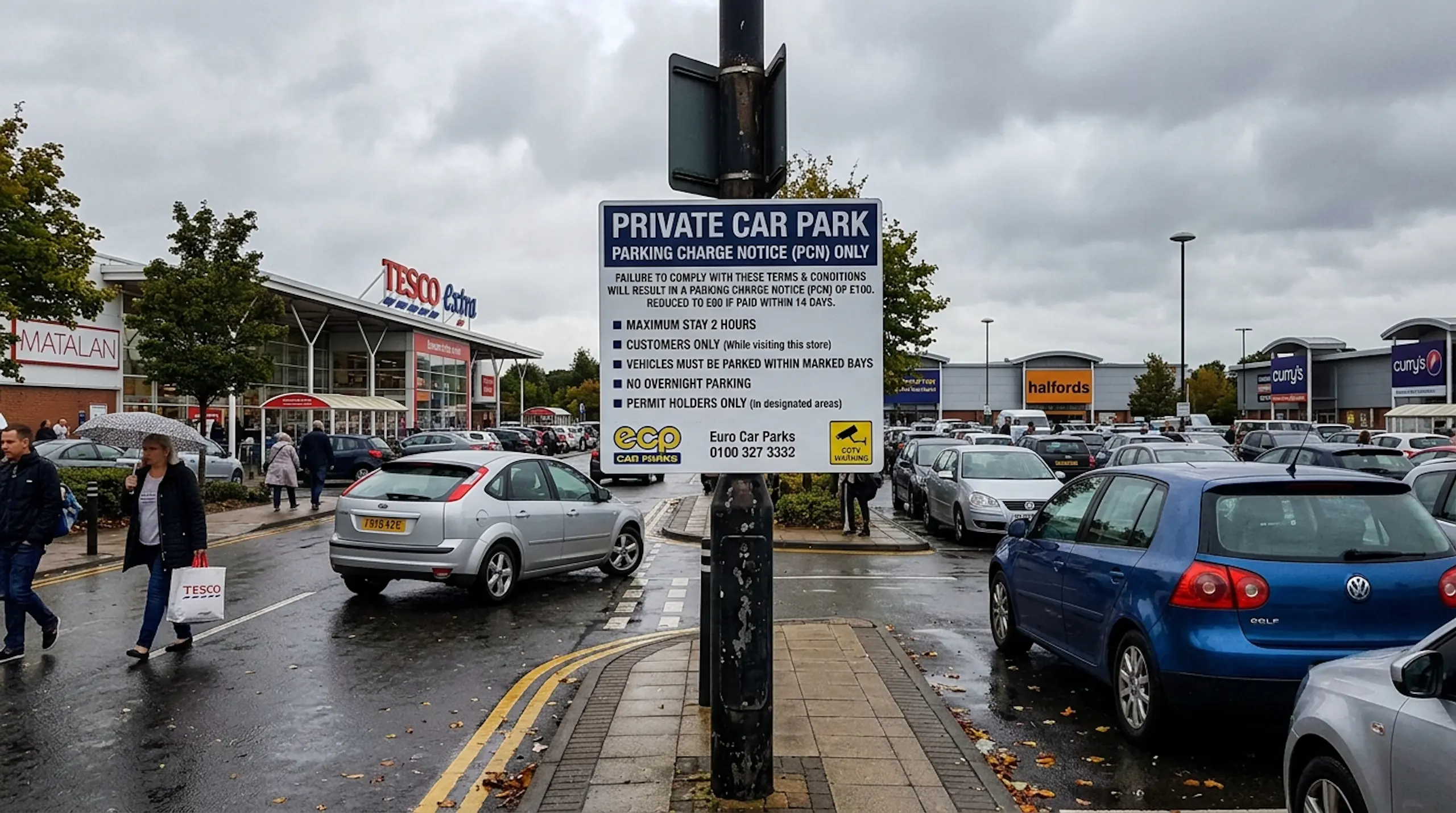
Council PCN or private Parking Charge Notice: the difference that matters
Because the names are nearly identical, drivers regularly pay the wrong type or miss a genuine chance to challenge. Here is the distinction in plain terms:
- A Penalty Charge Notice from a council or TfL is backed by law. It has a formal appeal route through an independent tribunal, and if it is left unpaid it can be enforced through the courts.
- A Parking Charge Notice from a private company on private land, such as a supermarket, retail park or hospital car park, is a claim that you broke the terms of a parking contract. The company cannot fine you or add points; it can only ask you to pay and, as a last resort, take you to the county court.
So the first question is never "how much?"; it is "who issued this?" The issuing authority is printed on the notice. If it came from a council or TfL, it is a statutory PCN; if it came from a private operator, it is a contractual charge with a different appeal route (POPLA or the Independent Appeals Service). Private operators can pursue the registered keeper only because of the Protection of Freedoms Act 2012, and the same Act banned clamping on private land.
What about TfL PCNs, ULEZ and the congestion charge?
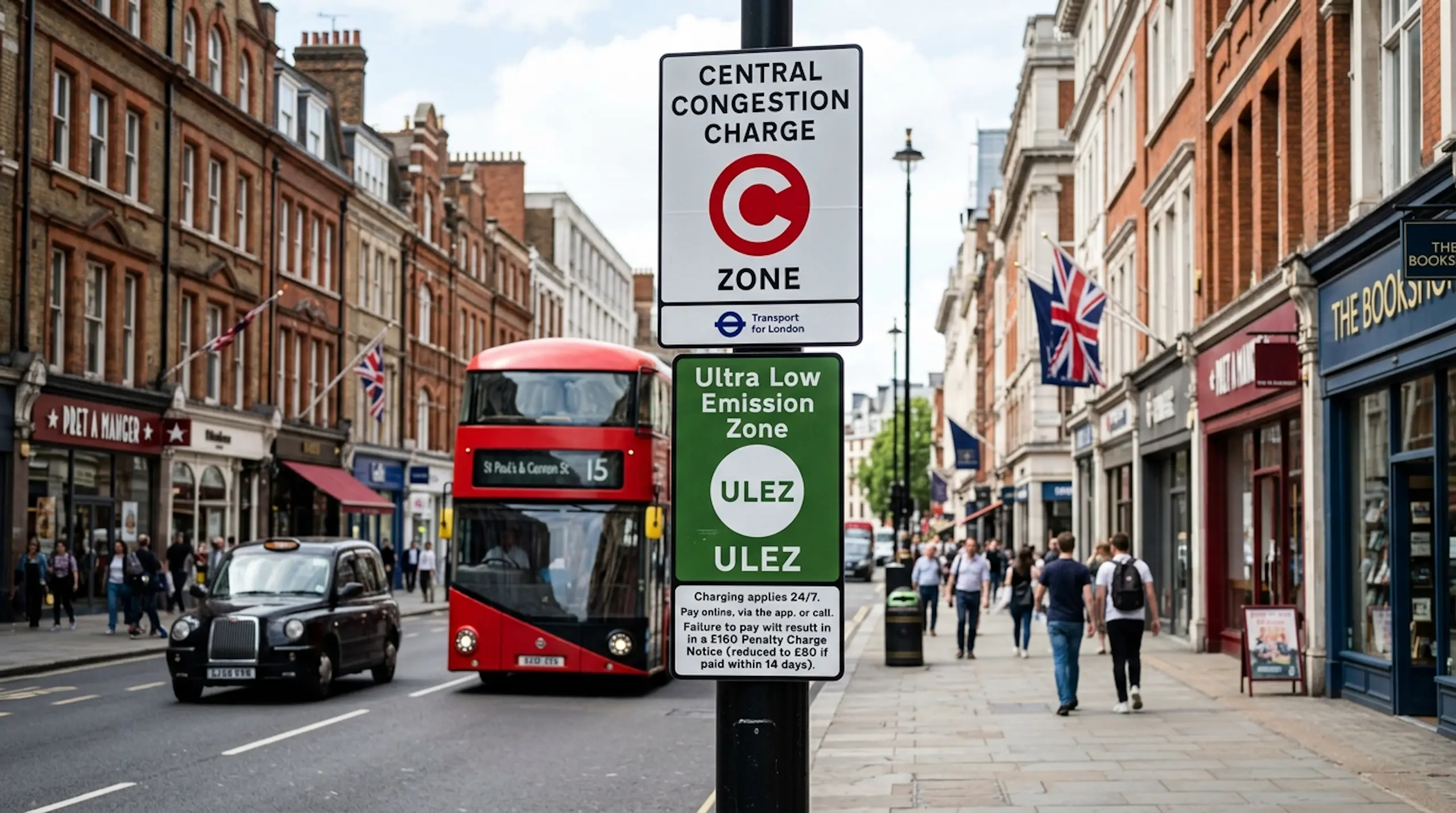
TfL PCNs sit on their own track. A TfL PCN is £160, reduced to £80 if you pay within 14 days, and the same figure applies whether the penalty is for the congestion charge, ULEZ, a red route, or a bus lane. For context, the congestion charge is £15 a day and the ULEZ daily charge is £12.50, so missing those payments is what triggers the much larger £160 penalty.
The appeal route is also slightly different: you make a representation to TfL, and if it is rejected you can appeal for free to London Tribunals. Because the congestion charge and ULEZ are separate schemes, a single trip into central London in a non-compliant vehicle could trigger more than one charge.
How much is a PCN?
The amount depends on who issued it and how serious the contravention was:
- Council PCN outside London - £50 (lower level) or £70 (higher level); halved to £25 or £35 if you pay within 14 days.
- Council PCN in London - £90 to £160 depending on the borough band and the contravention; halved within 14 days.
- TfL PCN (congestion charge, ULEZ, red route or bus lane) - £160, reduced to £80 within 14 days.
- Private Parking Charge Notice - capped at £100, with at least a 40% discount for prompt payment.
For the full breakdown by city and contravention, see how much is a parking ticket in the UK.
What is the PCN process, from ticket to payment or appeal?
A council PCN follows a set sequence. Knowing it helps you act before the cost grows:
- The PCN is issued - by hand, on the windscreen, or by post if a camera caught the contravention.
- Within 14 days - pay at the 50% discount, or challenge it. If the notice arrived by post or from a camera, this window is often 21 days; check the dates on your notice.
- By 28 days - pay the full charge or make a formal challenge.
- Notice to Owner - if nothing happens, this is sent to the registered keeper, opening the formal representations stage.
- Notice of Rejection - if the council rejects your representation, you can appeal for free to an independent tribunal: London Tribunals for London, or the Traffic Penalty Tribunal for the rest of England and Wales.
- Charge Certificate - if it is still unpaid, the charge increases by a further 50%.
- Order for Recovery - the debt can be registered at the Traffic Enforcement Centre, a court based in Northampton, adding court costs.
- Enforcement agents - finally, bailiffs may be instructed. They must give you a Notice of Enforcement with at least 14 days' notice, and they cannot force their way into your home on a first visit.
This is the point where the Snapmyfine app earns its place: snap a photo of your PCN and it reads the issuing authority, the reference, the contravention and the deadlines, explains in plain English what the notice means, tells you honestly whether you have grounds to challenge it, and reminds you before the 14-day discount window closes. The PCN deadline guide sets out every date in more detail.
Should you pay or appeal your PCN?
Here is the honest version:
- Pay if the PCN is correct, you have no real grounds, and you can still catch the 14-day discount; that is the cheapest, simplest outcome.
- Appeal if you have genuine grounds and some evidence: unclear or missing signs, a valid permit or paid session, a loading exemption, or a contravention that did not actually happen. Gather photos and paperwork first.
- Get help if you are unsure. Appealing is free at every official stage, and a challenge usually pauses the clock while it is considered.
One important caution: paying a PCN can count as accepting it, which may end your right to appeal. If you think the ticket is wrong, do not rush to pay just to grab the discount. To weigh it up, start with how to appeal a parking ticket.
"This article is general information, not legal advice. Always check the details printed on your own notice, and seek qualified advice for anything serious or high value."
Common mistakes to avoid
- Confusing the two PCNs. A council Penalty Charge Notice and a private Parking Charge Notice are not the same; identify the issuer first.
- Paying when you actually have grounds, and losing the right to appeal.
- Missing the 14-day window and paying double what you needed to.
- Ignoring it, which only triggers the Charge Certificate, court action and enforcement agents. See what happens if you ignore a parking ticket.
- Falling for scam messages. GOV.UK has warned that texts claiming to be from the Department for Transport about unpaid parking fines are a scam; the DfT does not issue parking fines. Go straight to the council or TfL website rather than clicking a link in an unexpected message.
If you manage more than one vehicle, these notices and deadlines multiply quickly, and a single missed Charge Certificate adds 50% each time; Snapmyfine for fleet operators is built to handle that at scale, and you can read more on the Snapmyfine for fleet operators page.
Sort your PCN in 60 seconds with Snapmyfine
You do not have to decode the notice alone. Download Snapmyfine free on iOS and Android, photograph your PCN, and the app reads the council, the reference, the contravention and the deadlines, explains what it all means in plain English, tells you honestly whether you have grounds to challenge it, and reminds you before the discount window closes. If you decide to pay, you can do it securely in seconds, no card needed. Snap your PCN and pay in seconds, or build your appeal with confidence.
Frequently asked questions
What does PCN stand for?
PCN stands for Penalty Charge Notice, a civil penalty issued by a council or TfL for a parking, bus lane or traffic contravention. Confusingly, the same initials are also used for a private Parking Charge Notice, which is an invoice from a private parking company.
Is a PCN a fine?
A council PCN is a civil penalty rather than a criminal fine. You will not get a criminal record or licence points, but it is enforceable and can be pursued through the courts if it is ignored.
Is a PCN the same as a parking ticket?
"Parking ticket" is the everyday term; a council PCN is the formal version of one. A private Parking Charge Notice is also commonly called a parking ticket, but it is a contractual charge, not a council penalty.
Do you have to pay a PCN?
If the PCN is correct and you have no valid grounds, paying within 14 days at the 50% discount is usually the sensible choice. If you believe it is wrong, you can appeal for free instead.
How long do you have to pay a PCN?
You normally have 28 days to pay or challenge a council PCN, with a 50% discount in the first 14 days (often 21 days if the notice arrived by post or from a camera). Always check your own notice.
What happens if you don't pay a PCN?
A council PCN escalates: after 28 days it can rise by 50% at the Charge Certificate stage, then be registered as a debt at the Traffic Enforcement Centre, and finally be pursued by enforcement agents.
Will a PCN affect my credit score?
Not on its own. A PCN only affects your credit file in the rare case where it escalates to a county court judgment for non-payment.
Can you appeal a PCN?
Yes. You can make an informal or formal challenge to the council, and if that is rejected you can appeal for free to London Tribunals (in London) or the Traffic Penalty Tribunal (elsewhere in England and Wales).
