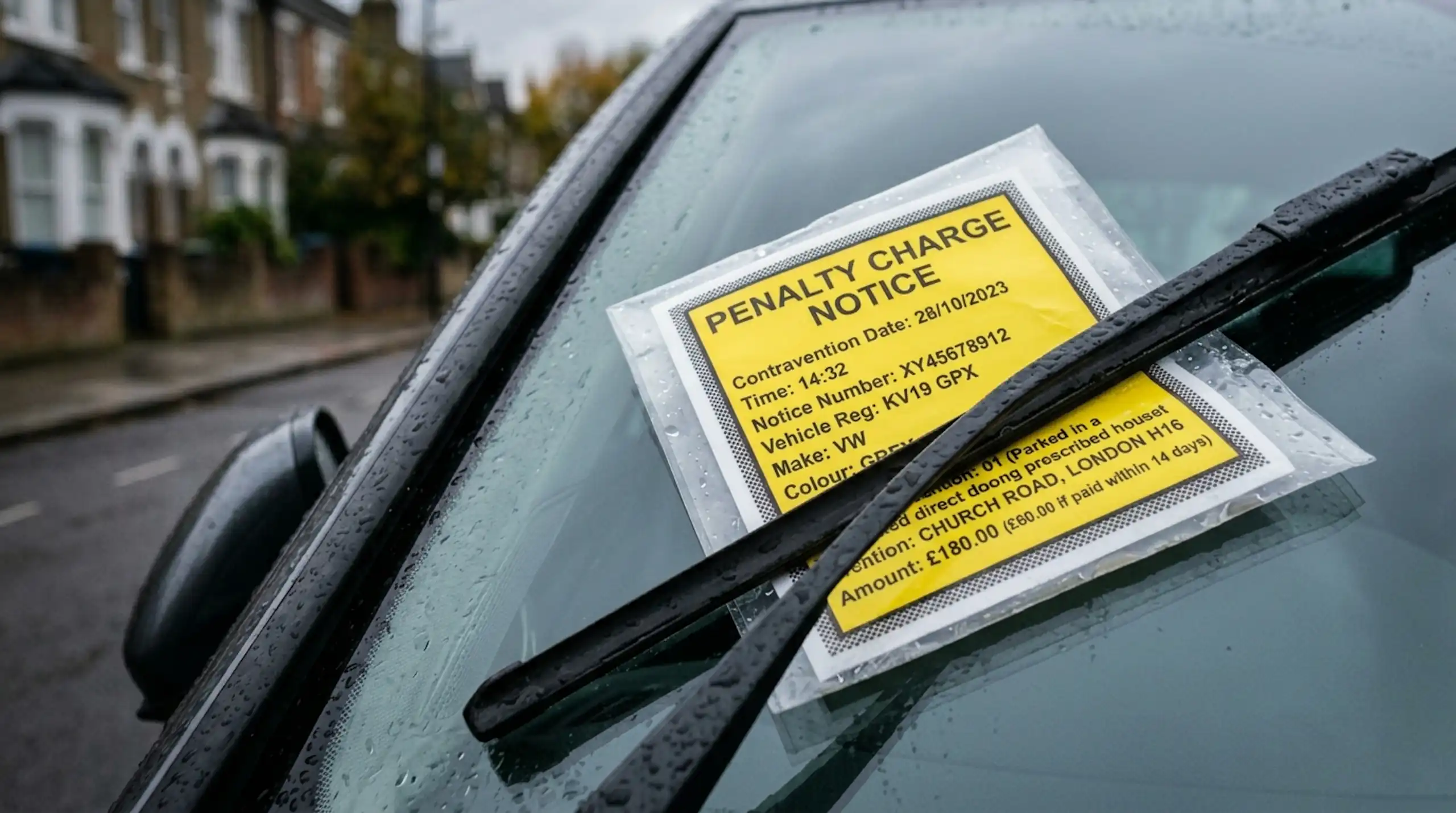
Finding a ticket on your windscreen, or a notice in the post, is annoying; the good news is the cost is usually clear once you know what you are looking at. So, how much is a parking ticket in the UK? In short: a council Penalty Charge Notice (PCN) is normally £50 to £70 outside London and £90 to £160 in London; a Transport for London fine is £160; and a private parking ticket is capped at £100. Most of these are halved if you pay quickly, and you can often appeal.
Before you reach for your card, take a breath. The first job is not to pay; it is to work out who issued the ticket and which rules apply, because that decides both the price and whether you have grounds to challenge it. This guide breaks down every type and amount, the discount and deadlines, and what happens if a fine is left unpaid.
TL;DR: parking ticket costs at a glance
- Council PCN outside London - £50 (lower level) or £70 (higher level); halved to £25 or £35 if you pay within 14 days.
- Council PCN in London - £90 to £160 depending on the borough band and how serious the contravention is; halved if you pay within 14 days.
- Transport for London PCN - (congestion charge, ULEZ, red routes, bus lanes). £160, reduced to £80 if you pay within 14 days.
- Private parking ticket - (Parking Charge Notice). up to £100, with at least a 40% discount for prompt payment.
- Deadlines. - you normally have 28 days to pay or challenge a council PCN, with a 50% discount in the first 14 days.
- Ignore it and it grows. - an unpaid council PCN can rise by a further 50% at the Charge Certificate stage, then head to court.
How much is a parking ticket in the UK?
There is no single national figure, because a "parking ticket" can be one of several different notices, each with its own price and process. The amount depends on three things: who issued it, where you parked, and how serious the contravention was.
Here is the quick comparison:
- Council PCN (outside London) - issued by the local council; typically £50 or £70; reduced by 50% if you pay within 14 days.
- Council PCN (London) - issued by a London borough; £90 to £160; reduced by 50% within 14 days.
- TfL PCN (congestion charge, ULEZ, red route or bus lane) - issued by Transport for London; £160; reduced by 50% within 14 days.
- Private Parking Charge Notice - issued by a private parking company; up to £100; at least 40% off within 14 days.
- Fixed Penalty Notice (FPN) - issued by the police, council or DVSA; the amount varies (often around £100) and can carry penalty points.
The two you are most likely to see are the council PCN and the private Parking Charge Notice. They sound almost identical and even share the initials "PCN", but they are very different things; more on that below.
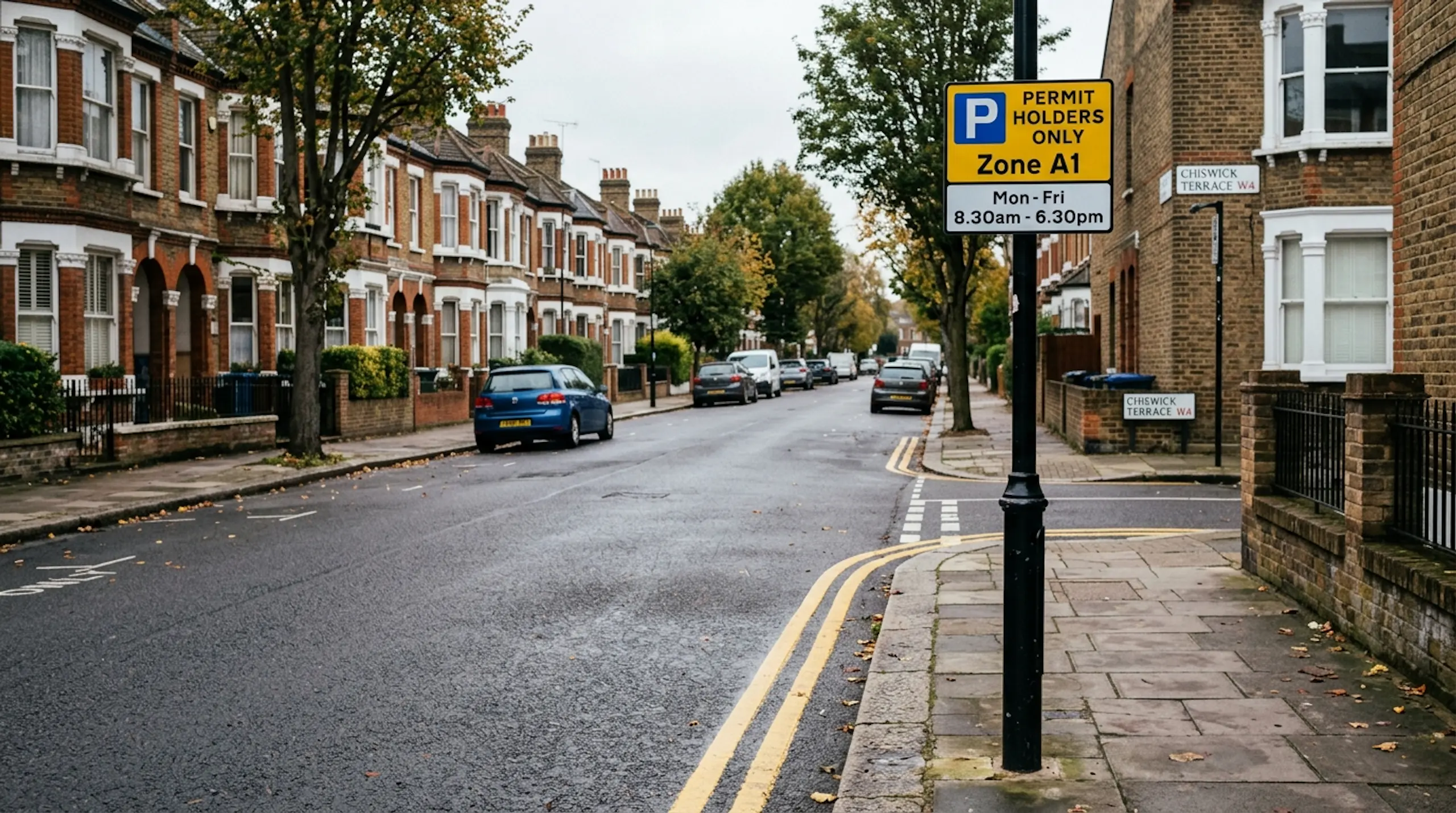
How much is a council parking ticket (PCN)?
A council Penalty Charge Notice is a civil penalty issued by a local authority for breaking a parking, bus lane or moving traffic rule. The amount is set in two tiers: a higher level for more serious contraventions, such as parking on double yellow lines or in a disabled bay, and a lower level for things like overstaying in a pay and display bay.
Outside London, the amounts are set nationally:
- Higher level - £70, reduced to £35 if you pay within 14 days.
- Lower level - £50, reduced to £25 if you pay within 14 days.
These figures have applied for some years, and the government has been reviewing whether to raise them; for now, £50 and £70 remain the standard amounts across England outside the capital.
In London, charges are higher and are split into two borough bands. The current amounts, set by London Councils, are:
- Band A - (central and inner boroughs, including Westminster, Camden, the City of London, Kensington and Chelsea, Islington and others): higher level £160 (£80 within 14 days); lower level £110 (£55 within 14 days).
- Band B - (the remaining boroughs and areas): higher level £140 (£70 within 14 days); lower level £90 (£45 within 14 days).
Bus lane and minor moving traffic contraventions in London are charged at £160, halved to £80 if you pay within 14 days. If your PCN was issued by a CCTV camera rather than handed to you in person, the discount window is usually 21 days rather than 14; check the dates printed on your notice.
According to SnapMyFine, more than 20,000 PCNs are issued across London every single day, so if you have one, you are far from alone.
How much is a parking ticket in London?
This is one of the most searched questions, and the answer is: anywhere from £90 to £160 for a borough PCN, depending on the band and the contravention, or a flat £160 for anything issued by Transport for London. London is simply more expensive than the rest of the country, because borough charges were raised in April 2025 to bring them into line with TfL's levels.
The single most useful thing to remember is the 14-day rule: paying within that window roughly halves the cost. A £160 ticket becomes £80; a £110 ticket becomes £55. If you genuinely have no grounds to challenge it, paying early is the cheapest outcome.
How much is a TfL fine for the congestion charge, ULEZ, red routes or bus lanes?
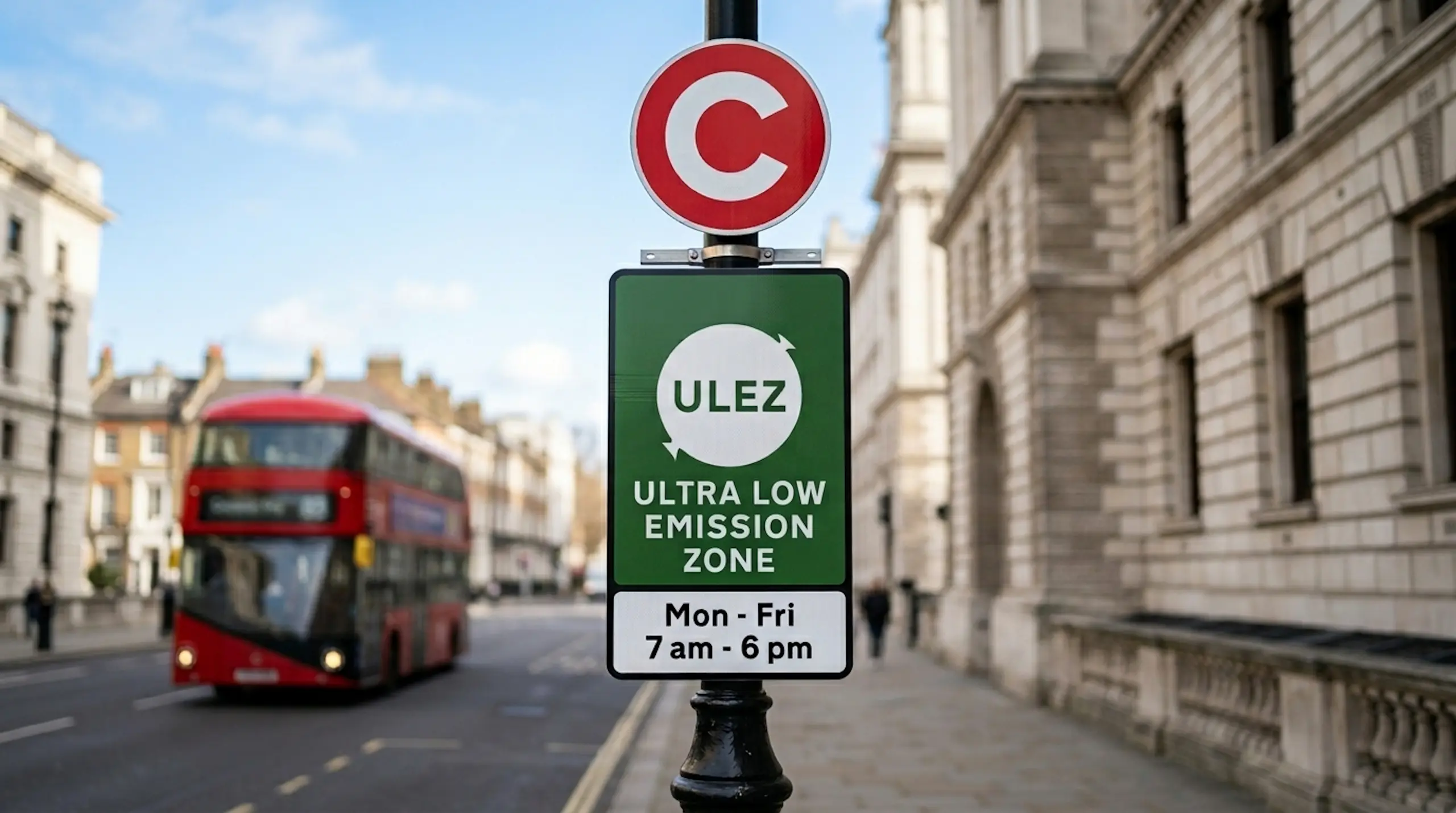
Transport for London issues its own PCNs, and these sit on a separate track from borough tickets. A TfL PCN is £160, reduced to £80 if you pay within 14 days. The same £160 figure applies whether the fine is for:
- not paying the £15 daily congestion charge on time;
- driving a non-compliant vehicle in the Ultra Low Emission Zone (ULEZ) without paying the £12.50 daily charge;
- stopping or parking on a red route; or
- a bus lane or moving traffic contravention on a TfL road.
The appeal route is also different. You make a formal representation to TfL within 28 days (and within 14 days if you want to protect your discount), and if TfL rejects it, you can appeal for free to the independent London Tribunals. The congestion charge and ULEZ are separate schemes, so on the same day you could owe both; if you miss both payments, you could receive two penalties.
This is the point where checking your notice carefully really pays off. SnapMyFine reads your PCN with its camera, pulls out the issuing authority, the reference number and the deadlines, and explains in plain English what the notice actually means and what your options are; it then reminds you before the 14-day discount window closes, so a £160 fine does not quietly become a much larger one.
How much is a private parking ticket (Parking Charge Notice)?
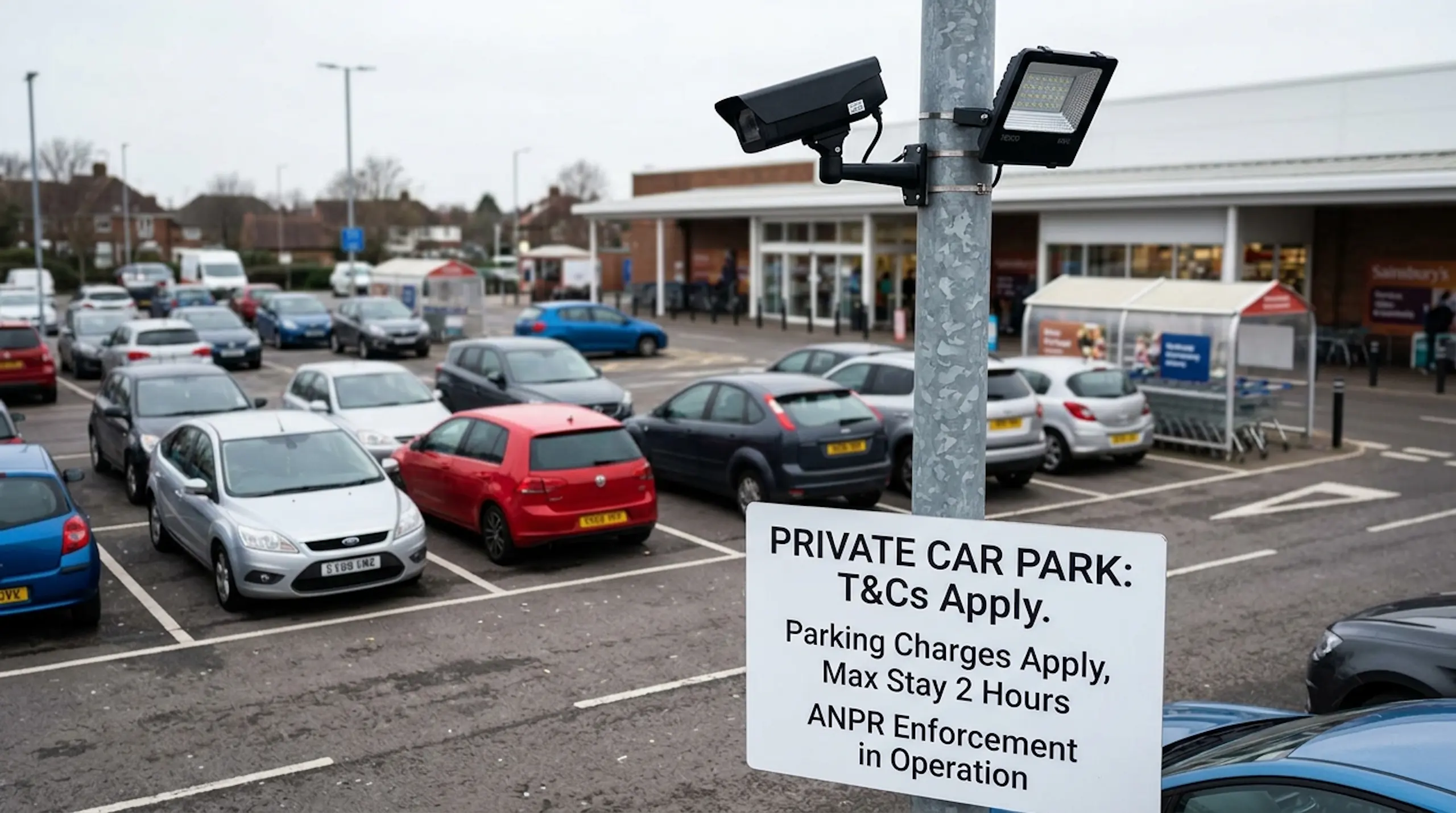
A private parking ticket, properly called a Parking Charge Notice, is issued by a private parking company on private land such as a supermarket, retail park or hospital car park. It is not a council fine and it is not a criminal matter; it is a claim that you broke the terms of a contract by, for example, overstaying.
Under the private parking sector's single Code of Practice, a private parking charge must not normally exceed £100, and the operator must offer a discount of at least 40% if you pay within 14 days, which can bring it down to around £60.
Operators that belong to the British Parking Association or the International Parking Community must follow this code, give you a 10-minute grace period at the end of your stay, and offer an independent appeals service: POPLA for BPA members and the Independent Appeals Service (IAS) for IPC members.
Private operators can only chase you because of the Protection of Freedoms Act 2012, which lets an accredited company request the registered keeper's details from the DVLA and send a Notice to Keeper, or a Notice to Hirer if the vehicle was leased or hired. The same Act banned clamping on private land, so no one can clamp or tow your car simply for a parking dispute in a supermarket or retail car park.
It is worth knowing that the government has long planned a stricter statutory code under the Parking (Code of Practice) Act 2019, which proposed lower caps. That code was withdrawn in 2022 after legal challenges and, following a further consultation, has not yet come into force; so the £100 industry cap is what applies today. If you receive a charge for more than £100 from an accredited operator, that itself may be grounds to challenge it.
Check your fine in 60 seconds with SnapMyFine
You do not need to decode your ticket by yourself. Download SnapMyFine free on iOS and Android, snap a photo of your PCN, and the app reads the council, the reference, the contravention and the deadlines, explains what it all means in plain English, tells you honestly whether you have grounds to challenge it, and reminds you before the discount window closes. If you decide to pay, you can do it securely in seconds, no card needed. Snap your PCN and pay in seconds, or build your appeal with confidence.
Council PCN or private parking ticket: why the cost and rules differ
Because the two notices look so similar, drivers constantly mix them up, and that confusion can lead to paying the wrong amount or missing a real chance to appeal. Here is the difference in plain terms:
- A Penalty Charge Notice (PCN) from a council or TfL is a civil penalty backed by law. It has a formal appeal route (the council, then a tribunal) and, if ignored, can be enforced through the courts.
- A Parking Charge Notice from a private company is an invoice for an alleged breach of contract. The company has no power to fine you or to add points to your licence; it can only ask you to pay and, ultimately, take you to the county court if you refuse.
So the first question is never "how much?"; it is "who issued this?" The name of the issuing authority is printed on the notice. If you are unsure which type you are holding, the parking ticket help hub walks through how to tell them apart.
What is the 14-day discount, and is it really 50%?
For council and TfL PCNs, yes: paying within 14 days of the notice usually halves the charge. This is a genuine statutory discount, not a sales gimmick. For private Parking Charge Notices the discount is at least 40% within 14 days rather than 50%, but the principle is the same: prompt payment costs less.
One important caution: paying a ticket can count as accepting that it was correctly issued, which may stop you appealing later. If you think the ticket is wrong, do not rush to pay just to grab the discount; check your grounds first. Many councils will reinstate the discount for a further 14 days if your formal challenge is rejected, but not all do, so read your notice. For the full breakdown of every stage and date, see the PCN deadline guide.
What happens if you don't pay a parking ticket?
Ignoring a council PCN does not make it disappear; it makes it more expensive. The charge escalates through a set series of stages:
- Day 0, PCN issued - the full charge is set.
- Within 14 days - pay or challenge to keep the 50% discount (21 days if the PCN was issued by a CCTV camera).
- By 28 days - pay or make a formal challenge; the full charge is now due.
- If still unpaid - a Notice to Owner is sent to the registered keeper.
- Charge Certificate stage - the charge increases by a further 50%.
- Order for Recovery - the debt is registered at the Traffic Enforcement Centre (a court based in Northampton), and court costs are added.
- Enforcement - a Notice of Enforcement is issued, then enforcement agents (bailiffs) may attend, adding enforcement fees.
According to GOV.UK, if you do not pay a PCN within 28 days you will get a Charge Certificate and have 14 days to pay the original fine plus 50% more, and a court order can follow. Enforcement agents must give you a Notice of Enforcement with at least 14 days' notice before attending, and they cannot force their way into your home on a first visit. The takeaway is simple: a £70 ticket can comfortably double, so deal with it early. There is a fuller explanation of each step in what happens if you ignore a parking ticket.
A private Parking Charge Notice escalates differently. The company cannot send bailiffs and cannot increase the charge endlessly; if you do not pay or appeal, it can add limited debt recovery costs and, eventually, take you to the county court for a judgment (a CCJ). That is still worth avoiding, but it is a civil claim, not a criminal penalty.
If you manage several vehicles, these numbers multiply quickly across a fleet, and a single missed deadline on each ticket adds up fast; SnapMyFine for fleet operators is built to handle that at scale, and you can read more on the SnapMyFine for fleet operators page.
Should you pay or appeal?
Here is the honest version, which is the only version worth giving:
- Pay if the ticket is correct, you have no real grounds, and you can still catch the discount. It is the cheapest, simplest outcome.
- Appeal if you have genuine grounds and ideally some evidence: unclear or missing signs, a valid permit or paid session, a loading exemption, a vehicle you had already sold, or a contravention that simply did not happen. Gather photos and paperwork before you challenge.
- Get help if you are unsure. You do not have to decide alone, and you do not have to guess.
Appealing is free at every official stage, and a challenge usually pauses the clock while it is considered. If you want a clear sense of whether your situation is worth contesting, start with how to appeal a parking ticket.
"This article is general information, not legal advice. Always check the details printed on your own notice, and seek qualified advice for anything serious or high value."
Common mistakes to avoid
- Paying the wrong type of ticket as if it were the other - Identify the issuer first; a private invoice is not a council penalty.
- Rushing to pay when you actually have grounds - Paying can waive your right to appeal.
- Missing the 14-day window and paying double what you needed to.
- Ignoring it completely - which only triggers escalation and extra costs.
- Falling for scam messages - GOV.UK has warned that texts claiming to be from the Department for Transport about unpaid parking fines are a scam; the DfT does not issue parking fines. If in doubt, go directly to the council or TfL website rather than clicking a link in an unexpected message.
For a calm, step-by-step starting point the moment a ticket lands, see what to do first when you get a parking ticket.
Frequently asked questions
How much is a parking ticket in the UK?
It depends on the type. Council PCNs are £50 to £70 outside London and £90 to £160 in London; a Transport for London fine is £160; and a private parking ticket is capped at £100. Most are halved if you pay within 14 days.
How much is a parking ticket in London?
London borough PCNs range from £90 to £160 depending on the band and the contravention, and TfL fines are £160. All are reduced by 50% if paid within 14 days.
How long do you have to pay a parking ticket?
You normally have 28 days to pay or challenge a council PCN, with a 50% discount in the first 14 days (21 days if it was issued by a CCTV camera). Always check the dates on your own notice.
Do you have to pay a private parking ticket?
A private Parking Charge Notice is an invoice for an alleged breach of contract, not a fine, so the company cannot force payment without going to court. If the charge is fair and correctly issued, paying (often at the discounted rate) is usually the sensible choice; if it is not, you can challenge it.
What happens if you don't pay a parking ticket?
A council PCN escalates: after 28 days it can rise by a further 50% at the Charge Certificate stage, then be registered as a debt at the Traffic Enforcement Centre, and finally be pursued by enforcement agents. A private ticket can lead to a county court claim. Either way, it is cheaper to act early.
Is a private parking ticket the same as a council PCN?
No. A council or TfL PCN is a civil penalty backed by law with a formal tribunal appeal route. A private Parking Charge Notice is a contractual claim from a private company that can only be enforced through the courts.
How much is a ULEZ or congestion charge fine?
Both are £160, reduced to £80 if you pay within 14 days. They are separate schemes, so a single non-compliant trip into central London could trigger more than one charge.
Can you really get 50% off a parking fine?
Yes, for council and TfL PCNs, if you pay within 14 days. Private parking operators must offer at least a 40% discount in the same window. Bear in mind that paying may stop you appealing later, so check your grounds first.
