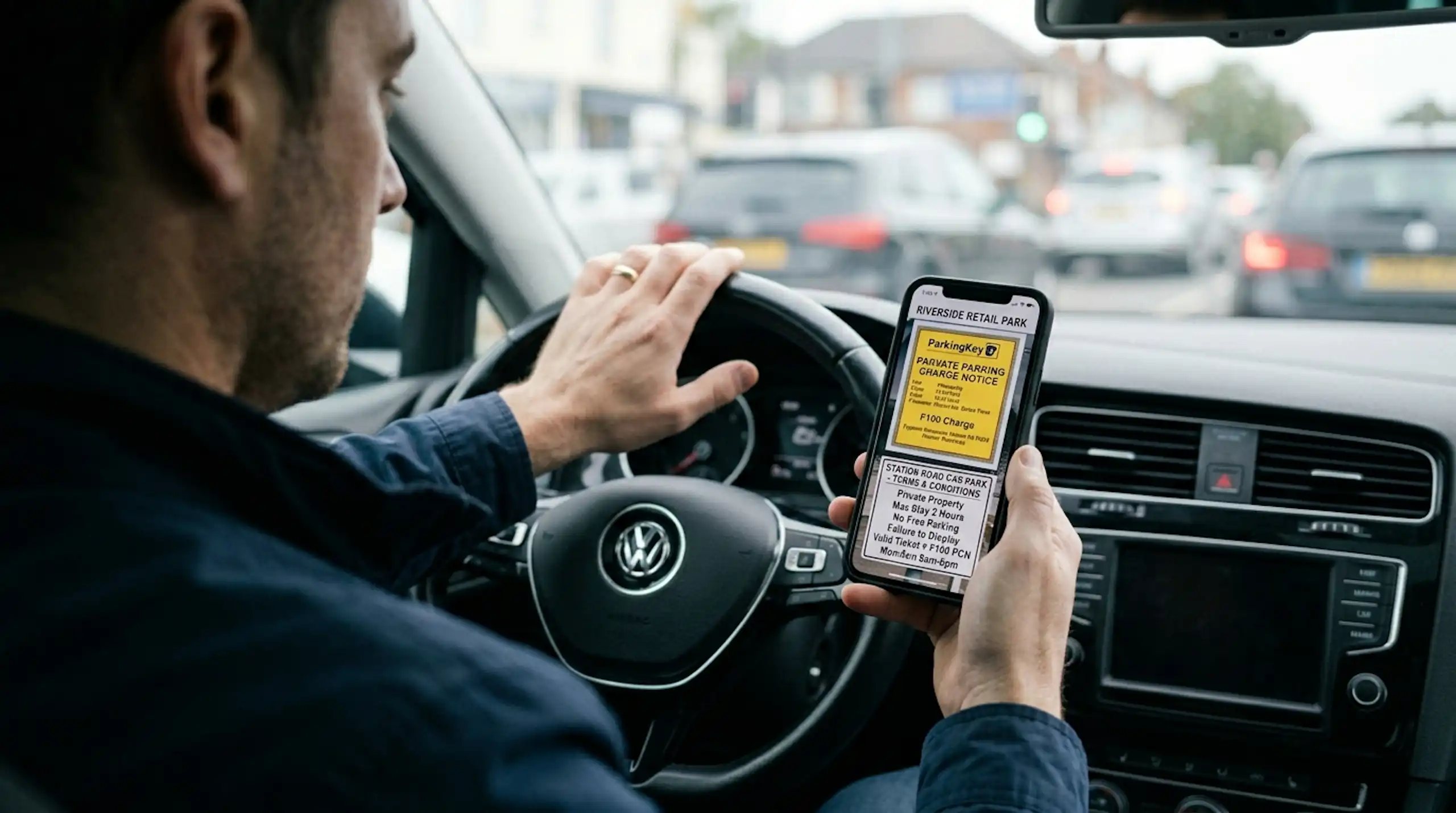
If a private parking ticket has landed on your windscreen or arrived in the post, here is the honest answer: it is not a fine and it is not a council penalty, so nothing is taken from you automatically; but if it was properly issued it can be legally enforceable, and ignoring it can end in a county court judgment. So the smart move is neither to pay on reflex nor to bin it; it is to check whether the charge is actually enforceable first.
Try not to panic, and please do not just ignore it. A private parking charge is an invoice for an alleged breach of contract, which means it can be challenged, and a good number are successfully challenged every day.
This guide explains the difference between a private ticket and a council fine, when private fines are and are not enforceable, what the Protection of Freedoms Act 2012 says about your liability as the registered keeper, and the grounds that actually work when you challenge one. It covers the rules in England and Wales; Scotland and Northern Ireland differ.
TL;DR: do you have to pay a private parking fine?
- It is not a fine - a private "Parking Charge Notice" is an invoice from a private company for an alleged breach of contract, not a penalty from a council or the police.
- You will not get points or a criminal record, and no bailiffs can be sent without a court judgment first.
- It can still be enforceable - since the ParkingEye v Beavis case in 2015, a properly issued private charge can be upheld in court.
- The cap is £100 - under the industry Code of Practice, with at least a 40% discount for prompt payment.
- Check before you pay - unclear signs, a late Notice to Keeper, or an operator that is not properly accredited can all make a charge unenforceable.
- Do not ignore it - if you neither pay nor challenge, the operator can take you to the county court, and losing or ignoring that can mean a CCJ.
Is a private parking ticket the same as a council fine?
No, and this is the difference that decides everything else. The two notices look almost identical and people confuse them constantly:
- A Penalty Charge Notice (PCN) from a council or Transport for London is a civil penalty backed by law, with a formal tribunal appeal route, and it can be enforced through the courts if ignored.
- A private Parking Charge Notice is issued by a private parking company on private land such as a supermarket, retail park or hospital. It is a claim that you broke the terms of a parking contract, so it is closer to an invoice than a fine.
The first thing to check is therefore who issued it. The name of the operator is printed on the notice. If it came from a private company rather than a council or TfL, the rest of this guide applies. There is a fuller comparison on the appeals and challenges hub.
So do you actually have to pay a private parking fine?
Here is the nuance. You are not automatically obliged to pay in the way you would be with a council fine, and a private company cannot simply take money from you. But "private tickets are unenforceable and you can always ignore them" is a myth, and a costly one.
If the charge was validly issued, you may well be legally liable to pay it under contract law, and refusing can lead to court action. So the real question is not "can I ignore it?" but "is this charge actually enforceable?" The rest comes down to whether the operator followed the rules.
Are private parking fines legally enforceable?
Yes, they can be. The key case is ParkingEye v Beavis, decided by the Supreme Court in 2015. A driver overstayed a free two-hour limit at a retail park and was charged £85. He argued the charge was an unenforceable penalty. The Supreme Court disagreed and held the charge was enforceable, because the operator had a legitimate interest in managing the car park and £85 was not extravagant or unconscionable.
That ruling ended the old argument that a charge is void simply because it is more than the operator's actual loss. A private charge is generally enforceable as a contract if:
- The signs were clear, prominent and legible, so a contract was actually formed when you parked.
- The operator has authority from the landowner to manage parking and issue charges on that site.
- The charge is not extravagant. In practice the industry caps private charges at £100, as confirmed in the private parking Code of Practice.
- The operator followed the correct process to hold you liable, which is where the Protection of Freedoms Act comes in.
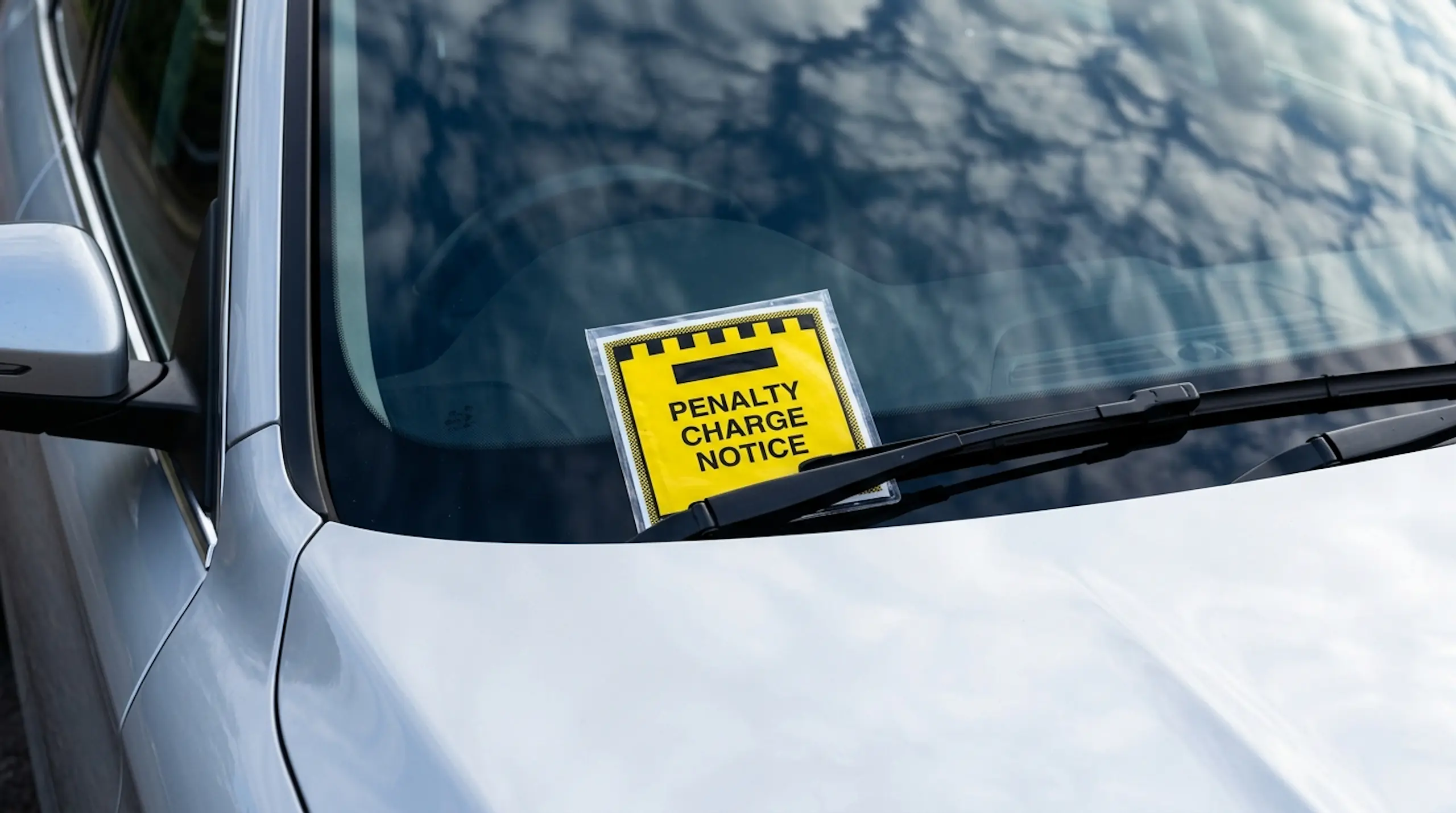
The Protection of Freedoms Act 2012: when are you liable as the keeper?
Normally the driver at the time is the person liable under the parking contract. The problem for operators is that cameras photograph a number plate, not a face, so they often cannot prove who was driving. The Protection of Freedoms Act 2012 (POFA) created a way around this in England and Wales: under strict conditions, an operator can transfer liability to the registered keeper of the vehicle.
The conditions are deliberately strict, and the timing of the Notice to Keeper is central:
- If a Notice to Driver was put on the windscreen, the Notice to Keeper must be served no earlier than 28 days and no later than 56 days after it.
- If there was no windscreen ticket, for example a camera-only (ANPR) case, the Notice to Keeper must be served within 14 days of the day after you parked.
If the operator misses these windows, or the notice is missing the required wording, keeper liability does not arise. The operator is then back to needing to prove who was driving, which it usually cannot do. A few more points worth knowing:
- The most the operator can recover from the keeper is the amount stated on the Notice to Keeper.
- You can name the driver instead of paying; the operator must then pursue that person, not you.
- Keeper liability is an alternative to driver liability, not an addition, so the operator cannot chase both of you for the same charge.
- For a hired or leased vehicle, the operator serves a Notice to Hirer, and liability can pass to the hirer named on the agreement.
- POFA also banned clamping and towing on private land, so no one can clamp your car over a parking dispute in a supermarket car park.
In short, you are only liable as the keeper if the operator has followed POFA to the letter.
When is a private parking ticket not enforceable, and how do you challenge it?
This is where most successful challenges are won. Rather than explaining why you overstayed, the stronger approach is usually to check whether the operator can actually enforce the charge. Common grounds include:
- Unclear or hidden signage - if the terms were not clearly displayed, a court may find no contract was formed.
- A late or non-compliant Notice to Keeper - if the operator missed the POFA deadlines above, or left out required wording, it cannot hold you as the keeper.
- The operator is not properly accredited - only members of the British Parking Association or the International Parking Community can lawfully obtain your details from the DVLA and offer an independent appeal.
- A charge above the £100 cap, or one that looks extravagant compared with any genuine interest.
- No grace period - the Code of Practice requires a short grace period at the end of your stay, so a charge for a few minutes' overstay may be challengeable.
- You were not the driver and were not properly made liable as the keeper under POFA.
- Genuine mitigation with evidence - a valid ticket or permit, a faulty payment machine, or a payment the camera failed to match to your registration.
SnapMyFine states that around 2 in 3 parking appeals are cancelled when they are challenged correctly, so it is well worth checking your grounds before you pay. If you want to put a challenge in writing, see how to write a parking ticket appeal letter and when you can successfully challenge a PCN.
The appeal route for a private ticket is its own process: you complain to the operator first, and if that is rejected you can appeal for free to POPLA (for BPA members) or the Independent Appeals Service (for IPC members), usually within 28 days of the rejection.
This is exactly the kind of check the SnapMyFine app is built for: snap a photo of the notice and it reads the operator, the reference and the dates, explains in plain English whether the charge looks enforceable, tells you honestly whether you have grounds to challenge it, and reminds you before the discount and appeal deadlines pass.
What happens if you don't pay a private parking ticket?
Ignoring a valid private charge does not make it vanish; it usually makes it grow. The typical path is:
- Reminder letters, then debt recovery letters, which often add further costs.
- A claim in the county court if the operator decides to pursue it.
- A County Court Judgment (CCJ) if you lose the claim or ignore it, which can affect your credit file for six years and be enforced.
Two reassurances remain true throughout: a private operator cannot add penalty points or give you a criminal record, and it cannot send bailiffs unless it has first won a county court judgment against you. So the danger in ignoring a private ticket is the court route, not an overnight escalation. For context on the amounts involved, see how much is a parking ticket in the UK.
Should you pay or appeal?
The honest version:
- Pay if the charge is valid, the signage was clear, you have no real grounds, and you can still catch the prompt-payment discount.
- Appeal if you have genuine grounds, especially a POFA or signage problem, or solid mitigation with evidence. Do not pay first, because paying can be treated as accepting the charge and can end your right to appeal.
- Get help if you are unsure. Checking enforceability is free, and so is every official appeal stage.
"This article is general information, not legal advice. Always check the wording and dates on your own notice, and seek qualified advice before defending a county court claim or for anything high value."
Common mistakes to avoid
- Treating a private ticket like a council fine, or the other way round; identify the issuer first.
- Assuming you never have to pay; since Beavis, valid private charges can be enforced.
- Ignoring it completely, and letting a £100 charge turn into a county court claim and a possible CCJ.
- Naming the driver, or admitting you were driving, before checking whether the operator has actually established liability.
- Paying just to be safe when you may have a clear ground to challenge.
If you manage more than one vehicle, private charges and POFA deadlines stack up quickly across a fleet; SnapMyFine for fleet operators is built to handle that volume.
Check your private parking ticket in 60 seconds with SnapMyFine
You do not have to work out whether the charge is enforceable on your own. Download SnapMyFine free on iOS and Android, photograph your private parking ticket, and the app reads the operator, the reference and the deadlines, explains in plain English whether it looks enforceable, and tells you honestly whether to pay or challenge it. If you have grounds, it helps you build the appeal; if the charge is valid, you can deal with it quickly and move on. Snap your ticket and know where you stand in seconds.
Frequently asked questions
Do you legally have to pay a private parking fine?
It is not a fine, so nothing happens automatically, but if the charge was validly issued under contract law you can be legally liable to pay it. Whether you must pay depends on the signage, the operator's accreditation and whether it followed the POFA rules.
Can you just ignore a private parking ticket?
It is risky. If the charge is enforceable and you ignore it, the operator can take you to the county court, and losing or ignoring that claim can result in a CCJ. It is safer to check the charge and challenge it if you have grounds.
Are private parking tickets enforceable in court?
Yes. Since ParkingEye v Beavis (2015), a properly issued private parking charge can be enforced as a contract, provided the signage was clear, the operator had authority, and the charge was not extravagant.
What is the most you can be charged for a private parking ticket?
Private parking charges are capped at £100 under the industry Code of Practice, usually with at least a 40% discount if you pay promptly.
Am I liable if I was not the driver?
Only if the operator made you liable as the registered keeper by following the Protection of Freedoms Act 2012, including serving a compliant Notice to Keeper in time. If it did not, it must pursue the actual driver instead.
How do I appeal a private parking ticket?
Appeal to the operator first, and if that is rejected you can appeal for free to POPLA (for BPA members) or the Independent Appeals Service (for IPC members), normally within 28 days.
Will a private parking ticket affect my credit score?
Not by itself. It only affects your credit file if it escalates to a County Court Judgment for non-payment, which can stay on your record for six years.
